
Best overall starting point: marine-treated timber for a conventional residential dock. Best for avoiding timber-borer damage: engineered composite piling. Best for substantial fixed structures: prestressed concrete. Best for specialized structural requirements: engineered steel. This 2026 guide helps you compare dock piling materials for a custom installation with Priority Marine Construction, serving waterfront homeowners throughout Pinellas County, including Clearwater Beach.
- Marine-treated timber is the default dock piling materials shortlist choice for conventional residential saltwater docks, subject to site design.
- Engineered composite piling avoids timber-borer damage, but strength and connection requirements depend on the specific system.
- Prestressed concrete suits substantial fixed structures; steel needs a defined corrosion-protection strategy.
- Priority Marine Construction builds custom docks and boat lifts throughout Pinellas County, including Clearwater Beach.
Why this matters
Choose the piling system before you settle on the dock's appearance. Decking gives you the walking surface; pilings transfer structural loads into the ground. A decking upgrade cannot correct an unsuitable foundation.
Saltwater exposure is only part of the decision. Your contractor also needs to account for the boat lift, dock layout, water depth, ground conditions, and access for installation equipment. A material that works on one waterfront property is not automatically the right specification next door.
Priority Marine Construction builds custom docks and boat lifts for homeowners across Pinellas County. For your project, request a proposal that explains the piling choice rather than simply naming a material.
What makes the best dock piling materials
Use these criteria for your 2026 shortlist before comparing material names:
- Structural suitability: The piling must support the proposed dock and any loads assigned to it in the design.
- Saltwater protection: Timber treatment, concrete detailing, composite construction, and steel protection require different specifications.
- Ground compatibility: Pile length, installation method, and required embedment depend on site conditions, not appearance.
- Connection design: Beams, lift brackets, and fasteners must connect to the selected piling without compromising its performance.
- Inspection and repair: Ask how deterioration will be identified and what repair or replacement involves.
- Installation access: Equipment access and handling requirements belong in the material decision, not in an afterthought.
Dock piling materials at a glance
These 4 material families serve different needs. The ranking is a residential starting point, not permission to substitute one material for another without design review.
| Rank and material | Best for | Standout feature | Key limitation |
|---|---|---|---|
| 1. Marine-treated timber | Conventional residential dock proposals | Familiar timber construction and connection methods | Treatment and detailing must suit marine exposure |
| 2. Engineered composite piling | Avoiding timber-borer deterioration | Non-timber construction | Structural properties vary by product and internal construction |
| 3. Prestressed concrete | Substantial fixed dock structures | Concrete section with prestressed reinforcement | Heavy handling and careful connection detailing |
| 4. Engineered steel | Specialized structural requirements | Engineered sections and connection options | Saltwater corrosion requires a defined protection strategy |
1. Marine-treated timber: best for conventional residential docks
Marine-treated timber is the first material to discuss when you want a conventional residential dock. Pressure treatment protects suitable wood against biological deterioration, but the treatment specification must match the exposure. Ordinary lumber and marine piling are not interchangeable.
For saltwater work, ask the contractor to identify the applicable marine-use treatment category. The American Wood Protection Association's use-category system distinguishes marine exposure from ordinary ground-contact applications. A proposal that says only treated wood leaves an important question unanswered.
Marine-treated timber pros:
- Uses familiar timber framing and connection methods.
- Can be specified for marine exposure rather than general outdoor use.
- Provides a conventional starting point for a residential piling layout.
Marine-treated timber cons:
- Incorrect treatment or poorly handled cuts and holes can compromise protection.
- Timber remains subject to biological deterioration and requires inspection.
- Existing timber piles cannot be judged sound from their exposed tops alone.
Best for: Homeowners considering a conventional residential dock whose site and structural design support timber piling.
Ask how the contractor will document treatment and handle field cuts or drilled holes. If you are keeping existing pilings, request an assessment of their condition and suitability for the proposed structure, not merely confirmation that they are still standing.
Verdict: Buy only when the marine treatment, dimensions, connections, and installation requirements are specified.
2. Engineered composite piling: best for avoiding timber-borer damage
Engineered composite piling deserves a place on your shortlist when avoiding deterioration of a timber pile is a priority. The term covers different constructions, including fiber-reinforced systems and products with internal reinforcement. It does not describe a single interchangeable material.
A composite jacket around an existing timber pile is also different from a new structural composite pile. Ask whether the proposed component carries structural loads, protects another material, or performs both functions.
Engineered composite piling pros:
- Does not rely on a timber section that marine wood-boring organisms can consume.
- Offers an alternative to preservative-treated wood.
- Can be evaluated as a complete engineered piling and connection system.
Engineered composite piling cons:
- Strength, stiffness, and connection requirements vary between systems.
- Long-term deflection and installation limits require product-specific review.
- The label composite does not establish suitability for boat-lift attachments.
Best for: Homeowners prioritizing resistance to timber-borer damage who can obtain a project-specific structural specification.
For a 2026 quote, request the exact piling construction and its supporting technical documentation. Ask how beams and lift components attach, and whether the proposed fasteners or brackets require reinforcement at the connection.
Verdict: Buy a documented structural system; skip proposals that describe the piling only as composite or maintenance-free.
3. Prestressed concrete: best for substantial fixed dock structures
Prestressed concrete piling combines concrete with tensioned steel reinforcement. It is an option for fixed structures where the engineering design and installation access support its use. A larger residential dock can justify evaluating concrete without turning the project into a commercial marina comparison.
Concrete is not immune to saltwater deterioration. Chloride exposure can contribute to reinforcement corrosion, so concrete quality, reinforcement protection, cracking, and connection details matter.
Prestressed concrete piling pros:
- Does not depend on timber preservation against marine wood borers.
- Provides a stiff structural section when designed for the application.
- Can support an engineered fixed-dock layout.
Prestressed concrete piling cons:
- Heavy piles require suitable handling and installation equipment.
- Cracks and damaged concrete need professional evaluation.
- Connections and future modifications require deliberate detailing.
Best for: Substantial fixed residential structures where the designer specifies concrete and the property allows the required installation approach.
Ask how the contractor will handle the piles and connect the dock framing. If an existing concrete piling shows cracking, spalling, or exposed reinforcement, do not cover the damage and assume the underlying problem is resolved.
Verdict: Buy when the structural design and installation plan support concrete; skip material-only promises of permanent protection.
4. Engineered steel: best for specialized structural requirements
Steel piling belongs on the list when a designer identifies a structural or installation reason to use it. Section shape, wall thickness, connections, and corrosion protection form part of that decision. Steel should not be your default simply because it looks strong.
Saltwater corrodes unprotected carbon steel. A specification must address the relevant exposure zones and explain the chosen protection measures rather than relying on an unspecified coating.
Engineered steel piling pros:
- Offers different engineered section shapes and connection arrangements.
- Supports purpose-designed structural details.
- Can be considered where the designer identifies a specific need.
Engineered steel piling cons:
- Corrosion protection requires a clear specification and inspection plan.
- Coating damage and connections need attention.
- Mixing metals can introduce galvanic-corrosion concerns unless properly detailed.
Best for: Projects with a documented engineering reason for steel, rather than homeowners seeking a generic residential default.
Request the protection system, connection details, and inspection requirements in writing. Ask how exposed or damaged areas will be addressed during installation and later ownership.
Verdict: Hold until the designer explains why steel fits the project and how corrosion will be managed.
Match the pilings to the boat lift
A dock piling and a boat-lift piling do not necessarily perform the same job. Lift loads, attachment points, and the boat's position need to be considered together. Do not assume a piling suitable for the walking dock can also support a lift.
Start with the boat's documented specifications, then identify equipment and other loads relevant to the proposed lift. The guide to boat lift weight capacities for common Pinellas County boats explains the capacity decision that should accompany the piling discussion.
For a combined project, ask Priority Marine Construction to address the dock layout and boat-lift installation together. The quote should distinguish the dock foundation from the lift-support requirements. That distinction also helps you compare competing proposals without treating different scopes as equivalent.
Request these documents with your 2026 quote
Ask for 3 documents or clearly identified proposal sections. You need enough detail to understand what is being built and which questions remain before construction.
- Site layout: Proposed dock footprint, piling positions, boat-lift location, and access around the boat.
- Piling specification: Material, dimensions, treatment or protection, connection approach, and applicable technical documentation.
- Installation scope: Installation responsibilities, equipment access, existing-structure removal, inspection requirements, and permit responsibilities.
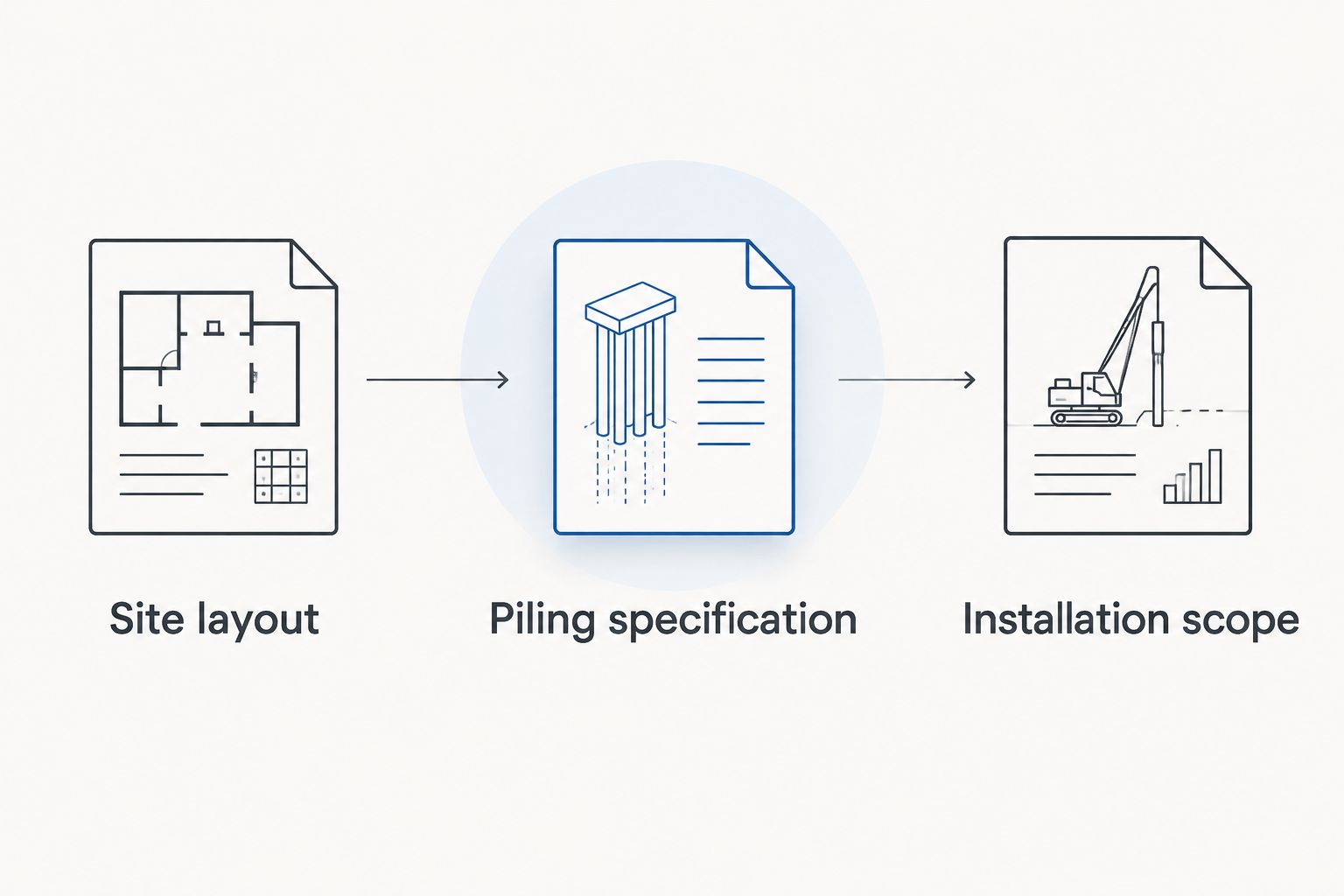
Review the documents together. A detailed material description does not compensate for a missing lift location, and a clear drawing does not replace the piling specification. Ask the contractor to explain exclusions before you accept the proposal.
Separate 2 decisions: choosing the piling material and accepting the complete installation scope. You need agreement on both. Request clarification when one proposal includes removal or connection work that another leaves undefined.
Request a Custom Dock Quote
Discuss your boat, waterfront property, dock layout, and piling requirements in Pinellas County.
How the materials are ranked
This 2026 ranking prioritizes conventional residential use, exposure protection, structural suitability, connections, and installation requirements. Marine-treated timber leads as a starting point for a conventional dock proposal, not as a universal winner in every soil or waterfront setting.
Composite, concrete, and steel each occupy a different use-case slot. The ranking does not claim that any material lasts a particular number of years or eliminates inspection. Service life depends on the specified system, site conditions, installation, and upkeep.
Which dock piling materials should you choose?
Start with properly specified marine-treated timber for a conventional residential proposal, then compare alternatives against a defined need. Choose engineered composite for its non-timber construction only after reviewing the structural system. Evaluate concrete for substantial fixed structures and steel for a documented engineering requirement.
Priority Marine Construction is best for Pinellas County homeowners seeking a custom dock and boat-lift installation. Bring the contractor your boat information, waterfront goals, and existing-dock details so the quote addresses the property rather than a generic material preference.
For your 2026 project, the deciding question is not which material sounds toughest. It is which specified piling system supports the proposed dock and lift at your site.
FAQ
What’s the best dock piling material for a saltwater home?
Marine-treated timber is a practical starting point for a conventional residential dock, subject to the site and structural design. Engineered composite, prestressed concrete, and steel suit different requirements; no material is the automatic winner for every waterfront property.
Are composite dock pilings better than wood?
Composite dock pilings are better suited to avoiding deterioration of a timber section, but they are not automatically better structurally. Review the specific construction, stiffness, connections, and installation requirements before choosing a system.
Can I reuse my existing dock pilings for a new boat lift?
Existing dock pilings need an assessment before reuse for a boat lift. Their condition, dimensions, embedment, connections, and proposed lift loads must be considered; an intact visible surface does not establish suitability.
Does concrete piling need maintenance in saltwater?
Concrete piling still needs inspection in saltwater. Cracking, spalling, and exposed reinforcement require evaluation because chloride exposure can contribute to reinforcement corrosion.
Can I use ordinary pressure-treated lumber for saltwater piling?
Ordinary pressure-treated lumber is not automatically suitable for saltwater piling. Ask for the marine-use treatment specification applicable to the proposed exposure rather than accepting a general treated-wood description.
How do I compare quotes for different dock piling materials?
Compare the site layout, piling specification, and installation scope together. Check that each proposal addresses the same dock and lift requirements, removal work, access, connections, and permit responsibilities.
Does Priority Marine Construction serve homeowners outside Clearwater Beach?
Priority Marine Construction serves waterfront homeowners throughout Pinellas County, including Clearwater Beach. The company builds and installs custom boat lifts, docks, and decks.
One last thing
The hidden portion of a piling matters as much as the part you can see. A neat row of exposed piles does not tell you whether the foundation meets the proposed design. Before approving your quote, ask how the contractor will establish and document the required installation conditions.
Related guides
- Dock decking materials for Florida saltwater exposure
- Boat lift types for Pinellas County saltwater docks
- Seawall-friendly dock designs for Pinellas County homes