
Best overall: shielded, wired path lights. Best for elevation changes: recessed step lights. Best supplemental option: solar markers. This 2026 guide compares dock lighting options for your boat, walking route, and boarding area without directing glare toward the water.
- Shielded path lights are the best overall dock lighting options for illuminating your walking route without exposed glare.
- Recessed step lights serve elevation changes; piling lights help identify the dock from your boat.
- Solar markers supplement dock lighting but should not be your only light for boarding or stairs.
- Prioritymarine builds custom docks and boat lifts for homeowners throughout Pinellas County, including Clearwater Beach.
Why this matters
A bright dock is not necessarily an easy dock to approach. An exposed light can shine into your eyes while leaving the deck edge, a step, or the gap beside your boat difficult to see.
Plan lighting around how you arrive, tie up, and walk ashore. For a new dock or lift, discuss those movements with Prioritymarine while planning the custom installation. Leave electrical design and installation to a qualified electrical contractor rather than treating dock wiring as a finishing task.
The best lighting plan illuminates your footing without shining into the approaching operator’s eyes. That rule matters more than choosing the brightest fixture.
What makes the best dock lighting options
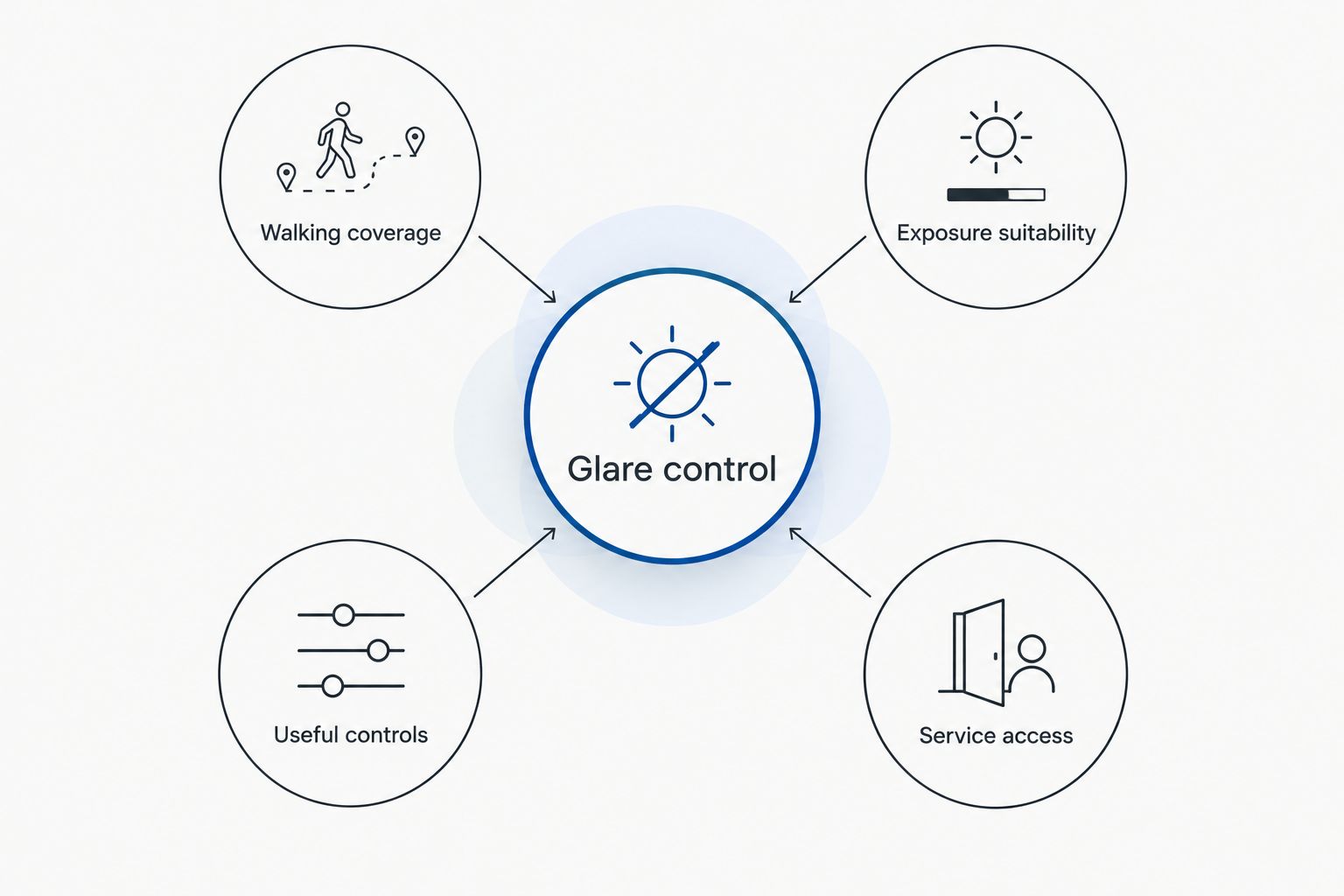
For a 2026 dock project, compare fixtures by where their light lands—not just by how they look during the day.
- Glare control: Choose shielding and placement that keep the light source out of your normal approach view.
- Walking coverage: Illuminate the route between shore, steps, dock edge, and boarding point without alternating bright and dark patches.
- Exposure suitability: Match each fixture, connection, and mounting method to its actual wet, splash, or submerged location.
- Useful controls: Choose how you will turn lights on before arriving and switch off unnecessary lighting afterward.
- Service access: Keep fixtures and electrical connections accessible without obstructing the dock or lift.
Separate your plan into 2 lighting zones: the walking route and the boarding area. They serve different jobs. The route needs steady visibility; the boarding area needs useful light where you step, handle lines, and operate equipment.
Dock lighting options at a glance
These are fixture categories, not interchangeable substitutes. Use the table to identify the job each light should perform before comparing individual models.
| Option | Best for | Standout feature | Key limitation |
|---|---|---|---|
| Shielded, wired path lights | Continuous walking routes | Direct light onto the deck | Require a planned electrical installation |
| Recessed step lights | Stairs and elevation changes | Place light near the tread | Need careful positioning and accessible installation |
| Shielded piling lights | Recognizing the docking position | Establish visible dock reference points | Exposed lamps can create approach glare |
| Switched boarding lights | Boarding and handling lines | Concentrate light on a working area | Poor aiming creates shadows or glare |
| Solar markers | Supplemental edge identification | Operate without a wired power connection | Output depends on charging conditions and battery condition |
1. Shielded path lights: best dock lighting for walking routes
Shielded path lights direct illumination onto the deck instead of exposing a bright lamp at eye level. Use them along the route from shore to your boat, with particular attention to turns and changes in direction.
Best for: Homeowners who want a primary lighting system for regular nighttime dock use.
A wired system lets you plan the walking route as a connected whole rather than relying on individual solar fixtures. The important choice is the fixture’s light distribution: a decorative housing does not guarantee that the deck beneath it is well lit.
Shielded path light pros:
- Put light where your feet travel.
- Support a consistent route between shore and boat.
- Can form the main layer of a coordinated lighting plan.
Shielded path light cons:
- Require electrical planning and suitable wiring protection.
- Poor spacing leaves dark gaps between fixtures.
- Protruding fixtures can interfere with ropes or foot traffic.
Ask the contractor to show where light will fall and where the fixture will sit. Keep mounting locations clear of cleats, walking space, and equipment access; do not choose positions solely to create a symmetrical daytime appearance.
Verdict: Buy shielded path lights as the default starting point for your walking route.
2. Recessed step lights: best dock lighting for elevation changes
Recessed step lights place illumination close to stairs, landings, or other changes in level. Their purpose is to make the tread and transition visible, not to wash the entire dock in light.
Best for: Docks with steps between the property, walkway, and boarding area.
A light that sits close to a step can show the walking surface without placing a bright source directly in your face. Placement still matters: a fixture hidden by a person’s legs or aimed away from the tread does not solve the problem.
Recessed step light pros:
- Target a specific trip hazard.
- Keep the fixture close to the structure.
- Complement path lighting without requiring broad floodlighting.
Recessed step light cons:
- Installation needs coordination with the step or dock structure.
- Difficult access complicates replacement.
- Incorrect placement leaves the step edge in shadow.
Review the steps from both directions. Descending toward the boat and climbing back toward shore create different sightlines, especially when you are carrying a bag or handling a line.
Do not use an illuminated step as a substitute for repairing a loose tread or addressing an awkward transition. Lighting reveals the walking surface; it does not correct the structure.
Verdict: Buy recessed step lights where your route changes level.
3. Shielded piling lights: best dock lighting for approach reference
Piling lights place visible reference points on the dock structure. A shielded fixture can help you recognize the intended docking position while keeping its main beam directed away from the approaching operator.
Best for: Homeowners who need to distinguish their dock’s approach and boarding position after dark.
Check the fixture from the helm before approving its position. A light that looks comfortable from the deck can be distracting when viewed from the water at a lower angle.
Shielded piling light pros:
- Make selected dock reference points easier to identify.
- Use existing structural locations where suitable.
- Can support the approach without illuminating the whole property.
Shielded piling light cons:
- Exposed lamps can shine directly toward the helm.
- Piling-mounted equipment can interfere with line handling.
- Reference lights do not necessarily illuminate the walking surface.
Keep the distinction between identification and navigation clear. Decorative dock lights are not substitutes for required vessel navigation lights or official navigation aids, and your installation should not create a confusing display.
Ask for a practical nighttime sightline check rather than choosing piling lights from a daytime photograph alone. Your normal approach direction should guide the review.
Verdict: Buy shielded piling lights for identifiable approach points, not as your only deck lighting.
4. Switched boarding lights: best dock lighting for hands-on tasks
A boarding light concentrates illumination where you step between boat and dock, manage lines, or access lift controls. Use a shielded, directed fixture rather than an exposed floodlight aimed across the water.
Best for: Homeowners who need additional light during boarding, unloading, or lift operation.
Treat this as a working light with a specific purpose. Aim it at the task area and switch it off when the task ends instead of using a broad beam as permanent background lighting.
Switched boarding light pros:
- Put extra light at the boarding point.
- Help you see lines, controls, and equipment nearby.
- Allow task lighting to operate separately from route lighting.
Switched boarding light cons:
- A person or boat component can block the beam.
- Poor aiming can create glare on the boat or water.
- A switch located only on shore is inconvenient when arriving by boat.
Discuss how you will activate the light before stepping ashore. Also check whether a moving lift or the boat itself blocks the illumination at different positions.
Verdict: Buy a switched boarding light when the main route lighting leaves your working area in shadow.
5. Solar markers: best dock lighting for supplemental edges
Solar markers combine a small solar panel, battery, and light in a self-contained fixture. They can identify selected edges or reference points without running a wired supply to each unit.
Best for: Supplemental marking where dependable primary lighting already covers walking and boarding.
Evaluate the charging location, not just the fixture location. Shade from a roof, boat, or nearby structure affects the sunlight reaching the panel, and battery condition affects nighttime operation.
Solar marker pros:
- Avoid a wired power connection at each fixture.
- Offer flexible placement for supplemental reference points.
- Can help identify an edge without a large light fitting.
Solar marker cons:
- Depend on sunlight and battery condition.
- Can produce uneven coverage as individual units perform differently.
- Still require secure mounting and maintenance access.
Do not assume a visible marker provides enough light to judge a step or boarding gap. Check the actual walking surface after dark, including after a cloudy day, before assigning the fixture a safety role.
Verdict: Buy solar markers as supplements; skip them as the sole lighting for stairs or boarding.
How these options rank
This 2026 ranking prioritizes glare control, walking coverage, exposure suitability, controls, and service access. Shielded path lights rank first because the walking route is the starting point for a usable residential dock lighting plan.
Step lights, piling lights, and boarding lights address separate gaps. Solar markers rank last as a primary safety choice because their operation depends on charging and battery condition.
This is a comparison of lighting types, not a tested ranking of fixture brands. Before selecting a model, check its installation instructions, location rating, mounting requirements, and service arrangements with your electrical contractor.
Plan the lighting before requesting your dock quote
For your 2026 project brief, give the dock builder and electrical contractor the same description of how you use the waterfront. Prioritymarine builds custom docks and boat lifts throughout Pinellas County, including Clearwater Beach; include your lighting goals when requesting the construction quote.
Organize the discussion around these details:
- Boat and lift: Identify the boat, planned lift, boarding side, and normal resting position.
- Walking route: Mark turns, stairs, gates, and the route back to the house.
- Approach view: Explain the direction from which you normally return after dark.
- Controls: State where you need to activate route and task lighting.
- Electrical scope: Ask who handles electrical design, installation, applicable permits, and inspections.
- Maintenance: Confirm how fixtures and connections remain accessible after construction.
Do not assume the dock construction quote includes every electrical item. Ask for the scope in writing, including fixtures, controls, wiring, and responsibility for coordination.
Before signing off, request a lighting review from 3 viewing positions: the helm, the boarding point, and the shore entrance. These views expose different problems that a single walk along the deck will miss.
Request a custom dock quote
Discuss your boat, property, and nighttime access needs for a Pinellas County dock project.
FAQ
What are the best dock lighting options for nighttime safety?
Shielded path lights are the best starting point for the walking route. Add step lights at elevation changes and directed task lighting at the boarding area rather than relying on one broad floodlight.
Are solar dock lights enough for boarding at night?
Solar markers should not be your only boarding light. Their operation depends on charging conditions and battery condition, so use dependable primary lighting where you step between boat and dock.
Are piling lights better than recessed dock lights?
Piling lights are better for visible approach reference points; recessed lights are better for targeted illumination near steps or walking surfaces. Choose by the task rather than treating either type as a complete lighting system.
Should dock lights shine toward the water?
Dock lights should illuminate the intended dock surface or working area without shining into the approaching operator’s eyes. Review the beam direction from the helm as well as from the deck.
Can I install ordinary outdoor lights on a dock?
An outdoor label alone does not establish suitability for every dock location. Have a qualified electrical contractor verify the fixture, connections, and installation method for the actual exposure.
What should I include when requesting a dock lighting quote?
Include your boat and lift arrangement, walking route, boarding side, approach direction, and preferred control locations. Ask the quote to identify the electrical scope and who handles applicable permits and inspections.
Does Prioritymarine serve homeowners outside Clearwater Beach?
Prioritymarine builds and installs custom docks and boat lifts throughout Pinellas County, including Clearwater Beach. Include nighttime access requirements when discussing your residential dock project.
Which dock lighting options should you choose?
Choose shielded path lights first, then add fixtures only where a specific task needs them. Add recessed lights for steps, shielded piling lights for approach reference, and switched boarding lights for handling lines or using the lift.
Keep solar markers in a supporting role. Buying the same fixture for every location is simpler to order, but the walking route, boat approach, and boarding point do not need the same beam.
One last thing
For your 2026 installation, make 1 nighttime arrival check part of the final lighting review. Approach from the water, stop at your usual position, and look for exposed lamps before stepping onto the dock.
A fixture hidden from view while you stand on shore can be directly in your eyes at the helm. Correct the aim or shielding before adding more light.
Related guides
- Best dock decking materials for Florida saltwater exposure
- Best boat lift types for Pinellas County saltwater docks
- Best dock designs for shallow waterfront lots in Clearwater Beach
- Best custom dock features for entertaining waterfront guests