
Best overall: fixed, open-base dock cleats. Best for clear walkways: folding cleats. Best for a flush deck: recessed pull-up cleats. For a custom installation in 2026, choose dock cleat and mooring hardware around your boat, dock structure, and line layout—not appearance alone.
- Fixed, open-base cleats are the best default dock cleat and mooring hardware for straightforward residential tie-ups.
- Folding and recessed cleats reduce walkway obstructions but add moving parts and installation considerations.
- Piling-mounted cleats suit dedicated tie-off locations; mooring snubbers supplement cleats rather than replace them.
- Prioritymarine builds custom docks and boat lifts for waterfront homeowners throughout Pinellas County, including Clearwater Beach.
Why this matters
A cleat is only as dependable as its attachment and the structure beneath it. A polished fitting does not solve weak decking, unsuitable fasteners, or a line that rubs against an edge.
For homeowners planning a new dock in 2026, hardware placement belongs in the design discussion. Prioritymarine builds custom docks and boat lifts throughout Pinellas County, including Clearwater Beach. Discuss where you will board, walk, and handle lines before settling on individual fittings.
Choose the attachment and line layout before choosing the cleat finish. That order keeps the decision focused on securing your boat and using your dock comfortably.
What makes the best dock cleat and mooring hardware?
Use these criteria to compare fittings and contractor recommendations:
- Structural attachment: The fasteners and supporting structure must suit the intended load. Do not assume deck boards alone provide adequate support.
- Line fit: The cleat needs enough usable space for your actual dock lines and the way you secure them.
- Corrosion compatibility: Check the specified materials for the cleat, fasteners, washers, and backing—not just the visible fitting.
- Safe placement: Keep fittings and loaded lines out of boarding routes and walking paths wherever the layout allows.
- Inspection access: You need a practical way to check the attachment, surrounding structure, and any moving parts.
No single material label answers all these questions. Stainless steel, aluminum, and other hardware materials require an installation suited to their environment and contact with adjoining materials. Ask for the manufacturer's installation instructions rather than accepting a verbal assurance that a fitting is suitable for saltwater.
Dock cleat and mooring hardware at a glance
These 2026 recommendations compare hardware types, not specific products. Each option serves a different job; the last item is an accessory, not a primary attachment point.
| Rank and option | Best for | Standout feature | Key limitation |
|---|---|---|---|
| Fixed, open-base cleats | Everyday residential tie-ups | Accessible horns with no folding mechanism | Remain above the dock surface |
| Folding cleats | Shared walking and line-handling areas | Fold down when not in use | Hinges and moving surfaces need inspection |
| Recessed pull-up cleats | Docks designed around a flush walking surface | Retract into a deck-mounted housing | Need suitable clearance and installation access |
| Piling-mounted cleats | Dedicated tie-off points beside pilings | Place an attachment on a suitable piling | Position and piling condition limit suitability |
| Mooring snubbers | Softening abrupt loading in compatible dock lines | Add cushioning within a line arrangement | Do not replace cleats or structural support |
1. Fixed, open-base cleats: best for everyday residential tie-ups
Fixed, open-base cleats provide an exposed fitting around which you secure a dock line. Their straightforward shape makes them the default choice when you have a suitable mounting location outside the main walking route.
Choose the fitting around your line, not a photograph. Check that the cleat accommodates the intended line arrangement without crowding its horns or forcing the line against nearby hardware.
Fixed, open-base cleat pros:
- No folding or retracting mechanism to operate.
- Accessible shape for handling and checking lines.
- Visible mounting area supports routine inspection.
Fixed, open-base cleat cons:
- Raised horns create an obstruction in walking areas.
- Placement can expose nearby lines to rubbing against dock edges.
- A simple fitting still needs a properly designed attachment.
Best for: Homeowners with dedicated tie-off positions and room to keep cleats away from foot traffic.
Ask your contractor to show where each cleat attaches to the supporting structure. Through-bolting with suitable backing is an established attachment approach, but the correct connection depends on the dock and the manufacturer's instructions.
Verdict: Buy fixed, open-base cleats as the default when the structure and walkway layout support them.
2. Folding cleats: best for shared walking areas
Folding cleats have a raised working position and a lowered position when not in use. They suit locations where a permanently raised fitting would interfere with how you use the dock.
A lowered cleat does not make an active mooring line disappear. Review the complete line path before treating folding hardware as the answer to a crowded boarding area.
Folding cleat pros:
- Reduce the exposed obstruction when folded down.
- Retain an accessible cleat shape when raised.
- Offer an alternative where fixed horns conflict with dock use.
Folding cleat cons:
- Moving parts add inspection and maintenance tasks.
- The lowered profile varies by design; check the actual fitting.
- Operation must remain practical around your lines and other hardware.
Best for: Homeowners whose dock serves both as a tie-up area and a frequently used walkway.
Before specifying folding cleats for a 2026 installation, ask to see how the proposed mechanism operates. Confirm that you can raise it, secure the line, and inspect its attachment without awkward reaching.
Verdict: Buy folding cleats where a lower unused profile solves a clear walkway problem.
3. Recessed pull-up cleats: best for a flush-deck design
Recessed pull-up cleats retract into a housing installed in the dock surface. They are a design-led choice for homeowners who want to minimize exposed hardware when the boat is away.
The housing requires space within the dock assembly. Installation also needs to address structural attachment, access, and any drainage requirements specified for the fitting.
Recessed pull-up cleat pros:
- Reduce exposed hardware when retracted.
- Keep the working cleat available at a planned tie-off point.
- Allow hardware recesses to be considered during new dock design.
Recessed pull-up cleat cons:
- Require a compatible deck opening and clearance beneath it.
- Recesses and moving surfaces need cleaning and inspection.
- Retrofitting can conflict with framing or existing services.
Best for: New dock projects where flush hardware is a stated priority and the structure can accommodate it.
Do not choose a recessed fitting first and ask the installer to work around it later. Have the contractor confirm the opening, support, and access requirements before approving the deck layout.
Verdict: Hold until the contractor confirms the recessed fitting suits the dock assembly.
4. Piling-mounted cleats: best for dedicated piling tie-offs
Piling-mounted cleats place a line attachment on a suitable dock piling. They are useful when the piling offers a practical tie-off position and the proposed connection suits its condition and construction.
Height matters. A cleat that looks convenient from shore can be awkward to reach from the boat or produce an unsuitable line angle as water levels change.
Piling-mounted cleat pros:
- Provide a tie-off location separate from the walking surface.
- Use a piling position already present in the dock layout.
- Allow attachment height to be considered during design.
Piling-mounted cleat cons:
- Depend on the piling's condition and a suitable connection.
- Fixed height does not follow changing water levels.
- Poor placement can put the line against a rough surface.
Best for: Docks with suitable pilings positioned for accessible, unobstructed line handling.
For a 2026 replacement project, have the supporting piling assessed before selecting new hardware. New fasteners do not correct deterioration in the material holding them. Keep cleat placement coordinated with your boarding location and any boat lift.
Verdict: Buy piling-mounted cleats only where the piling and line geometry support the installation.
5. Mooring snubbers: best for cushioning dock-line loading
Mooring snubbers add cushioning to a compatible dock-line arrangement. They supplement the attachment system; they do not provide an independent place to secure the boat.
Select a snubber according to its manufacturer's line compatibility and installation directions. Different designs use different attachment methods, so do not transfer instructions from an unrelated fitting.
Mooring snubber pros:
- Add cushioning within the dock-line arrangement.
- Complement suitable cleats and properly selected lines.
- Address line loading without replacing the primary attachment point.
Mooring snubber cons:
- Cannot compensate for weak cleats or damaged support.
- Add another component to inspect for wear.
- Require the correct line and installation arrangement.
Best for: Homeowners seeking additional line cushioning after the cleats, lines, and attachment layout have been checked.
A snubber is not a storm-protection guarantee. Keep severe-weather preparation separate from the everyday convenience decision, and follow applicable local guidance and your boat's requirements.
Verdict: Buy as a supplement to a sound mooring arrangement, not as a repair for one.
Check the whole attachment before ordering
For your 2026 project, review the proposed installation from the boat back into the dock. This catches problems that a hardware-only shopping list misses.
- Boat details: Provide the boat's dimensions, intended tie-up position, and dock-line details.
- Line route: Identify where lines pass near edges, boarding points, and walking areas.
- Structural support: Confirm what supports each fitting and how the connection is made.
- Inspection access: Establish how you will reach fasteners, backing, and moving parts after installation.
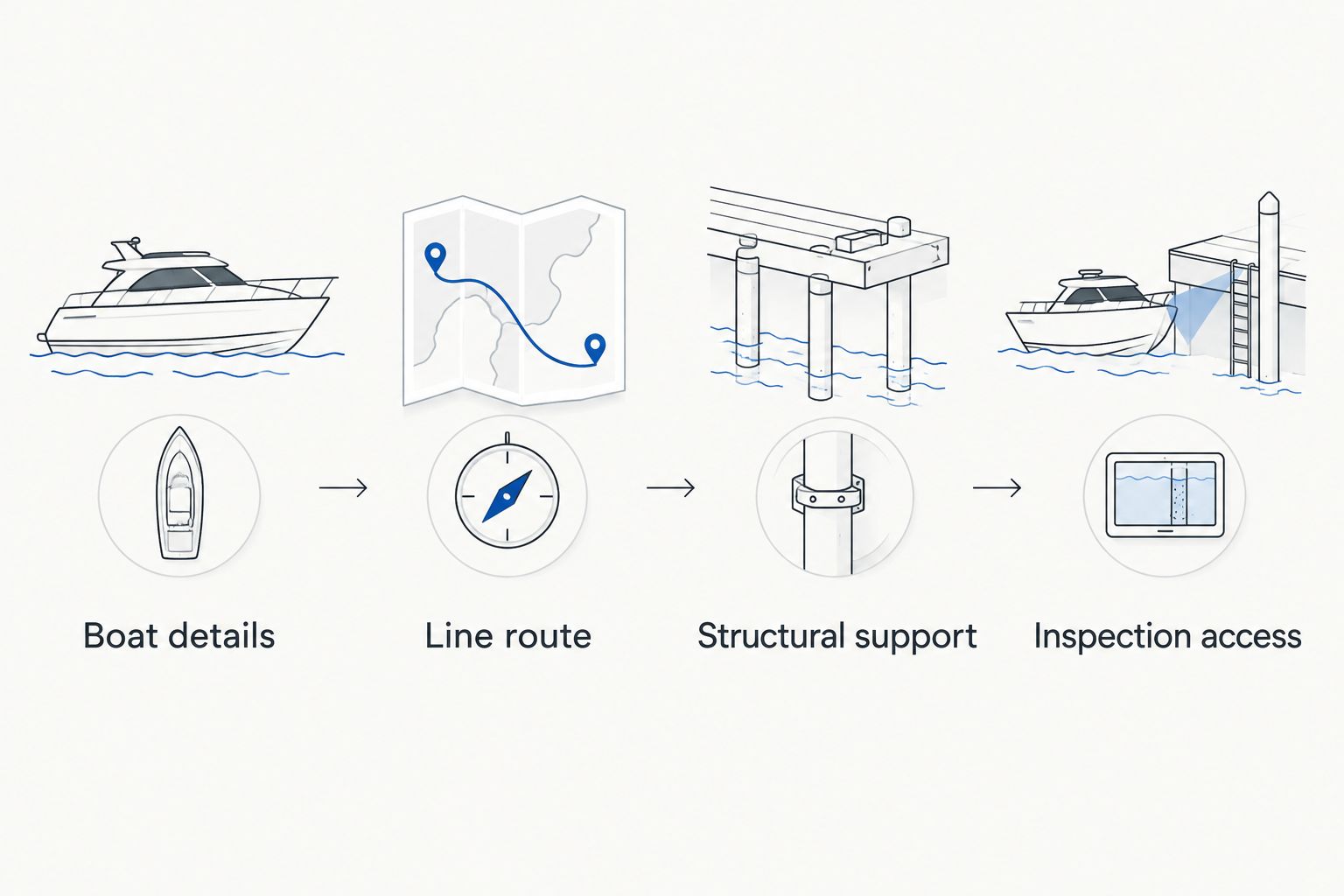
Ask the contractor to describe these points in the project scope. For replacement work, distinguish between replacing a fitting and repairing the structure beneath it; those are different tasks.
How these options were ranked
Fixed cleats rank first for straightforward operation without a moving mechanism. Folding and recessed cleats earn their places by reducing unused obstructions, while piling-mounted cleats serve a location-specific need. Snubbers rank separately as supporting hardware.
The criteria are attachment, line fit, material compatibility, placement, and inspection access. This is a practical selection guide, not a load test or a claim that every fitting within a category performs alike.
Which dock hardware should you choose?
Choose fixed, open-base cleats unless your dock layout gives you a specific reason to choose something else. Move to folding or recessed hardware when reducing obstructions justifies the additional installation and upkeep. Use piling-mounted fittings only after checking the piling and line position.
Prioritymarine builds custom docks and boat lifts for waterfront homeowners throughout Pinellas County. Request a quote that covers the dock layout and attachment locations alongside the dock cleat and mooring hardware selection.
Request a Custom Dock Quote
Discuss your boat, dock layout, and hardware needs for a Pinellas County waterfront property.
FAQ
What’s the best dock cleat and mooring hardware for a residential dock?
Fixed, open-base cleats are the best default for straightforward residential tie-ups. Choose the actual fitting and attachment around your boat, lines, supporting structure, and walking routes.
Are folding cleats better than fixed cleats?
Folding cleats are better where lowering unused hardware solves a walkway obstruction. Fixed cleats avoid a folding mechanism and suit dedicated tie-off locations outside foot traffic.
Can I attach a dock cleat directly to a deck board?
Do not assume a deck board alone provides adequate support for a mooring cleat. Have the connection specified for the intended load, dock structure, and fitting manufacturer’s instructions.
Are recessed cleats suitable for an existing dock?
Recessed cleats require compatible framing, an appropriate opening, and installation access. Have the contractor check those conditions before cutting into an existing dock.
Do mooring snubbers replace dock cleats?
Mooring snubbers do not replace dock cleats. They add cushioning to compatible lines while the cleats and supporting structure remain the attachment points.
Does stainless steel hardware eliminate saltwater maintenance?
Stainless steel hardware still requires inspection and care in saltwater exposure. Check the specified alloy, adjoining materials, fasteners, and manufacturer’s maintenance instructions.
What should I send a contractor for a dock hardware quote?
Send your boat details, property location, dock photographs, and intended boarding and tie-off locations. Ask the scope to identify the proposed fittings, attachment approach, and any structural repairs.
One last thing
Check a proposed cleat location from the boat, not just from the dock. The useful question is whether you can reach it and handle the line without leaning across an obstruction or creating a trip hazard.
Before approving a custom dock quote, ask Prioritymarine to discuss boarding, line handling, and lift placement together. Hardware works best when those decisions agree.
Related guides
- Dock accessories for Pinellas County boaters
- Dock railing and safety features for waterfront homes
- Dock decking materials for Florida saltwater exposure
- Boat lift placement for narrow waterfront lots