
Best overall: capped wood-plastic composite specified for dock use. Best wood-free alternative: cellular PVC approved for the intended installation. Best for matching an existing surface: uncapped composite with a confirmed replacement profile. For a custom installation in 2026, choose composite decking for docks around your boat access, waterfront exposure, and supporting frame—not the color sample alone.
- Capped composite is the default composite decking for docks shortlist; confirm dock-use approval before choosing a board.
- Cellular PVC is a wood-free dock decking alternative, not wood-plastic composite.
- Uncapped composite belongs on a matching-repair shortlist, not automatically on a new-dock specification.
- Priority Marine Construction builds custom docks and boat lifts throughout Pinellas County, including Clearwater Beach.
Why this matters
A dock board has to work with the structure beneath it and the way you reach your boat. A surface chosen only for appearance leaves important questions unanswered: wet footing, fastening, drainage, and access around the lift.
Priority Marine Construction is best for Pinellas County homeowners seeking custom dock and boat lift installations. Discuss the decking as part of the complete project with Priority Marine Construction, including waterfront homes in Clearwater Beach and elsewhere throughout the county.
For a 2026 project, require the exact board name and current installation instructions in your proposal. A broad description such as composite decking does not identify the material, permitted use, or fastening system.
What makes the best composite decking for docks
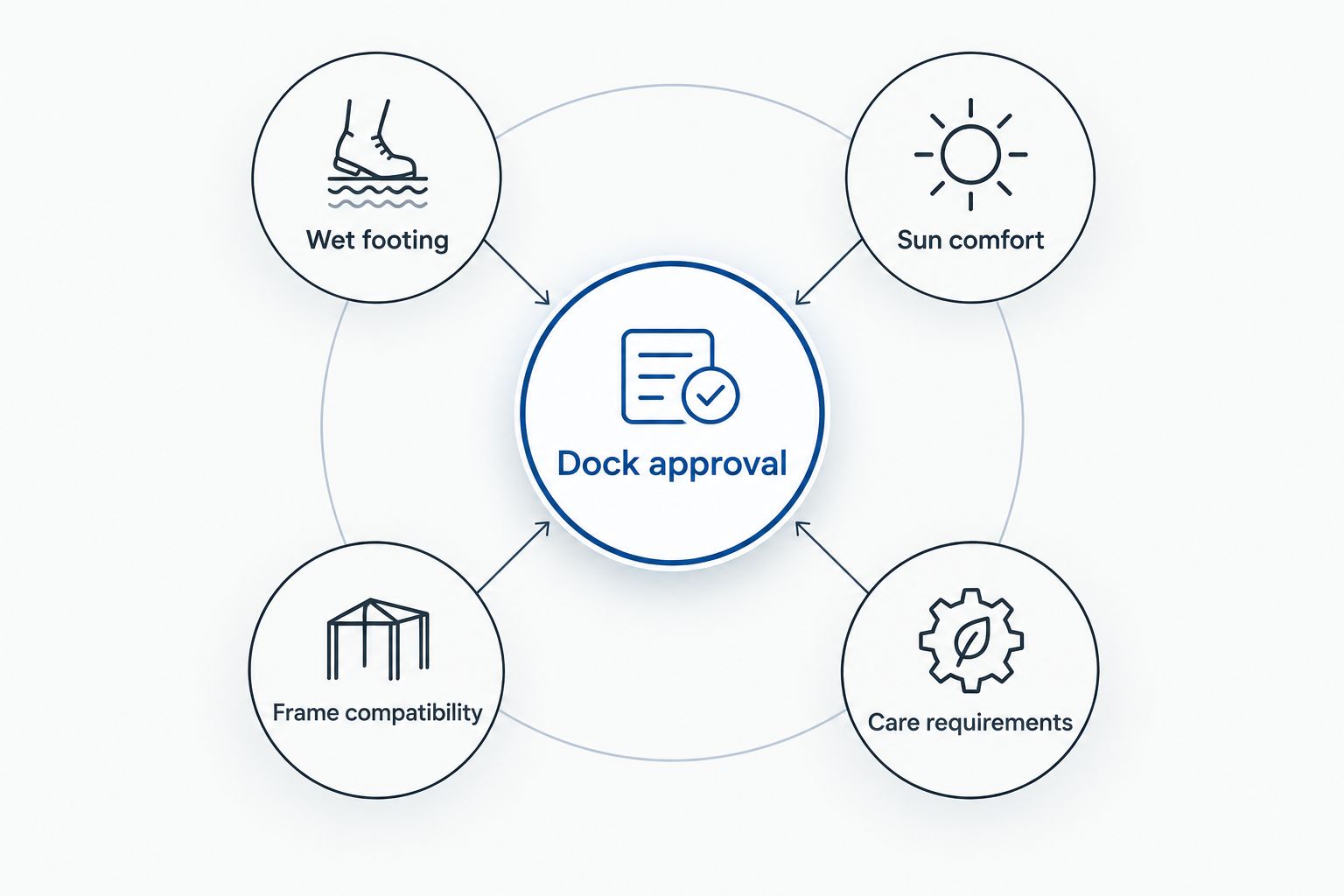
Use these criteria before comparing colors or selecting a contractor:
- Dock approval: Confirm that the exact board's documentation covers your intended dock application. Residential deck approval alone does not answer every waterfront question.
- Wet footing: Compare documented slip information where provided, and inspect the actual surface texture. A grain pattern is not proof of wet traction.
- Sun comfort: Handle samples outdoors under the conditions your dock receives. Do not assume a light color makes a surface comfortable for bare feet.
- Frame compatibility: Check permitted support spacing, board direction, fasteners, and edge details against the proposed structure.
- Care requirements: Read the cleaning instructions and restrictions. Low maintenance does not mean no cleaning or inspection.
The best material is the one that clears all these checks for your property. If the contractor cannot identify the board or explain its installation requirements, hold the selection rather than accepting a substitute description.
Dock decking options at a glance
These are material categories, not interchangeable product specifications. The ranking gives you a starting point for a residential dock quote; the exact product documentation determines whether a particular board belongs on your dock.
| Rank and option | Best for | Standout feature | Key limitation |
|---|---|---|---|
| 1. Capped wood-plastic composite | New docks where a composite surface is preferred | Protective cap over a wood-plastic core | Cap coverage and permitted applications differ by product |
| 2. Cellular PVC | Homeowners specifically seeking a wood-free board | PVC construction without a wood-fiber core | Not composite; heat, movement, and installation details still need checking |
| 3. Uncapped wood-plastic composite | Matching a confirmed existing board during repairs | Uncapped wood-plastic construction | Matching appearance does not establish structural suitability |
If you have not settled on composite, compare the broader dock decking materials for Florida saltwater exposure before narrowing the quote. That decision belongs before finalizing the frame and fastening details.
1. Capped composite: best for a new composite dock surface
Capped wood-plastic composite combines a wood-plastic core with an outer protective layer. It is the default starting point when you want composite decking for docks, provided the exact board is specified for the intended waterfront application.
Do not treat capped as a complete specification. Products differ in cap coverage, board profile, surface texture, and installation requirements; those differences belong in the contractor's material selection.
Capped composite pros:
- The outer cap provides a protective surface over the core.
- Wood-look finishes give you an alternative to exposed wood decking.
- Documented profiles and fastening instructions give the contractor a defined installation system to follow.
Capped composite cons:
- A protective cap does not establish wet-slip performance or barefoot comfort.
- Cut ends and exposed edges require attention to the manufacturer's instructions.
- The board cannot correct unsuitable framing or damaged structural members.
Best for: Homeowners planning a new dock surface who prefer composite and want the board, fasteners, and supporting structure specified together.
For your 2026 quote, ask the contractor to identify the manufacturer, exact board, cap coverage, and fastening method. Ask how the design handles perimeter boards, access around the lift, and any removable sections needed for service.
Verdict: Buy only after the exact capped composite board clears the dock-use and installation checks. A familiar material category is a starting point, not approval of every board sold within it.
2. Cellular PVC: best for a wood-free alternative
Cellular PVC decking is a separate material category from wood-plastic composite. It belongs in this comparison because homeowners considering composite often want to compare boards without a wood-fiber core.
Choose it for that material preference, not because wood-free means every waterfront requirement is solved. Confirm the intended application, support details, fastening, and handling of thermal movement for the exact board.
Cellular PVC pros:
- The board does not contain a wood-fiber core.
- It gives you a distinct alternative when comparing composite and nonwood decking.
- Manufacturer instructions can define the support, fastening, and movement details for the selected product.
Cellular PVC cons:
- Wood-free construction does not establish slip resistance or comfortable surface temperature.
- Movement requirements still affect gaps, joints, and installation details.
- A PVC option is not a like-for-like substitute unless the structure and fastening details suit it.
Best for: Homeowners who specifically want a wood-free surface and are willing to evaluate PVC separately from composite.
Ask to see the proposed board sample rather than a general color brochure. Review the surface while wet, examine the edge profile, and ask how boards terminate beside stairs or boarding areas; keep those observations separate from any documented performance rating.
Verdict: Buy when wood-free construction is your priority and the exact PVC board suits the dock design. Skip a substitution that changes the material without also reviewing the installation specification.
3. Uncapped composite: best for a confirmed matching repair
Uncapped wood-plastic composite has no outer protective cap. Its clearest place on this shortlist is a repair where the existing board has been positively identified and matching the profile serves a defined purpose.
That does not make every older dock a candidate for board-only repairs. Inspect the supporting structure before deciding whether replacing the walking surface addresses the problem.
Uncapped composite pros:
- A confirmed matching profile can help maintain consistent board dimensions during a repair.
- It gives the contractor a material category to investigate when identifying existing decking.
- A suitable matching board avoids introducing a different fastening detail without review.
Uncapped composite cons:
- There is no protective cap separating the wood-plastic material from surface exposure.
- A new replacement board does not necessarily match the weathered appearance of surrounding boards.
- Matching the surface leaves hidden structural defects unresolved.
Best for: Homeowners repairing an identified uncapped composite surface after the contractor checks the frame and confirms the replacement specification.
For a new 2026 dock, do not select uncapped composite merely because it resembles what is already on the property. Ask why it fits the new design, how its care requirements compare with the alternatives, and whether the intended dock application is documented.
Verdict: Hold until the existing profile and repair scope are confirmed. Skip an assumed match based only on color or a photograph.
How these options rank
Capped composite leads this shortlist because it directly answers the request for a new composite dock surface with a protective outer layer. Cellular PVC takes the wood-free slot; uncapped composite takes the matching-repair slot.
The order reflects those distinct uses, not a claim that every capped board outperforms every PVC or uncapped board. No universal durability score replaces checking dock approval, wet footing, sun comfort, frame compatibility, and care requirements.
Get a quote that specifies the whole dock
A qualified quote connects the surface material to the dock and boat lift layout. Priority Marine Construction builds custom boat lifts, docks, and decks for waterfront homeowners throughout Pinellas County, including Clearwater Beach; describe the complete project when requesting a quote.
Prepare these details before the site discussion:
- Boat information: Provide the boat's make, model, and relevant equipment details for the lift discussion.
- Existing conditions: Share photos of the walking surface, visible framing, waterfront edge, and current boat access.
- Daily use: Explain where you board, unload equipment, walk barefoot, and need clear passage.
- Material preference: State whether you want capped composite or want to compare it with a wood-free alternative.
- Project scope: Identify whether you need a new dock, a surface replacement, a lift installation, or a combined project.
Request 3 separate scope descriptions in the proposal: decking, supporting structure, and lift-related work. This is a comparison aid, not a requirement that every project needs all three types of work.
Bring 2 physical samples to the material discussion when comparing finalists. Ask the contractor to demonstrate how 1 full board would meet the perimeter or boarding area; that detail is more useful than judging a small sample in isolation.
For a 2026 installation, ask who handles any required approvals and what remains outside the quoted scope. Do not read a material recommendation as a permit guarantee or an inspection of hidden framing.
Request a custom dock quote
Discuss decking, dock layout, and boat lift needs for your Pinellas County waterfront home.
Which dock decking should you choose?
Start with capped composite when you want composite decking for docks. Move to cellular PVC when a wood-free board is the deciding requirement, and reserve uncapped composite for a repair that justifies a confirmed match.
Your final selection needs more than a category name. Require the exact board, current installation instructions, compatible support details, and a clear description of the work before accepting the material portion of a 2026 proposal.
FAQ
What’s the best composite decking for docks?
Capped wood-plastic composite is the default starting point for a new composite dock surface. Choose the exact board only after confirming its intended dock application, support requirements, fastening instructions, and care requirements.
Is PVC decking the same as composite decking?
Cellular PVC decking is not wood-plastic composite. PVC is a separate wood-free material category, so compare its installation requirements rather than treating it as an automatic substitute.
Does composite dock decking get slippery when wet?
Composite dock decking needs a product-specific wet-footing assessment. Surface texture alone does not establish slip performance; review documented information and keep the surface clean according to the manufacturer’s instructions.
Can I put new composite boards on my existing dock?
An existing dock needs a structural and installation review before receiving new composite boards. The frame must suit the selected board’s support and fastening requirements, and replacing the surface does not repair damaged framing.
Will lighter composite decking stay comfortable in the sun?
A lighter color is not a guarantee of comfortable surface temperature. Compare actual samples outdoors and review any product-specific heat information before choosing a board for barefoot areas.
What should I include when requesting a custom dock quote?
Include your waterfront location, boat information, existing dock photos, intended use, and preferred decking category. Priority Marine Construction serves homeowners throughout Pinellas County, including Clearwater Beach, for custom dock and boat lift installations.
Should I match old uncapped composite or replace the whole surface?
Base that decision on the condition of the dock and the confirmed existing board profile. A matching repair needs a defined scope; widespread surface or structural problems require a broader assessment.
One last thing
The board sample is not the dock specification. Before choosing a finish, ask the contractor to show where the boards end, how the perimeter is secured, and how you step between the dock and boat.
Those details turn a material preference into a usable design. Request a quote that addresses them alongside the decking selection.
Related guides
- Boat dock railing and safety features for waterfront homes
- Boat lift types for Pinellas County saltwater docks
- Low-maintenance decking options for Clearwater Beach docks