
Best overall: aluminum picket railing. Best for open views: stainless steel cable railing. Best for matching an existing wood dock: wood picket railing. For a custom dock in 2026, choose dock railing options around your boat’s boarding position, the dock structure, and the care you will actually perform—not appearance alone. This guide compares five railing designs and the safety features to plan alongside them.
- Aluminum picket railing is the default dock railing option for homeowners who want a straightforward barrier layout.
- Stainless steel cable railing suits open views but requires attention to tension, fittings, and cleaning.
- Prioritymarine builds custom docks and boat lifts for waterfront homeowners throughout Pinellas County, including Clearwater Beach.
- Plan boarding openings, ladders, lighting, and walking space before choosing railing materials.
Why this matters
A railing changes how you use a dock. Posts occupy deck space, gates need room to operate, and a barrier placed beside a boat can interfere with boarding or handling lines. A good-looking rail is the wrong choice if it blocks the work the dock must do.
Prioritymarine builds and installs custom docks and boat lifts throughout Pinellas County, including Clearwater Beach. Prioritymarine is a fit for homeowners planning a custom dock and boat lift together. Start your 2026 project discussion with the boat, the property, and the access route; choose the railing finish afterward.
What makes the best dock railing options?
Use these criteria to judge the complete railing assembly, not just the material named in a quote:
- Structural attachment: Posts and connections must transfer loads into suitable dock framing.
- Boarding access: Rails and gates must work with the boat, lift, cleats, and normal boarding position.
- Saltwater suitability: Evaluate posts, fasteners, fittings, finishes, and material connections together.
- Upkeep: Ask what needs washing, inspection, tightening, refinishing, or replacement.
- Visibility: Compare the view through the infill with the barrier’s practical function.
- Local requirements: Confirm applicable guard, opening, gate, and permit requirements for the actual property.
Dock railing options at a glance
| Railing option | Best for | Standout feature | Key limitation |
|---|---|---|---|
| Aluminum picket | A straightforward residential perimeter | Vertical infill with no cable tensioning | Finish and fastener condition still need attention |
| Stainless steel cable | Preserving waterfront sightlines | Slender infill between posts | Cable tension and end fittings require inspection |
| Composite rail with balusters | Coordinating with composite decking | Finished rail surfaces that coordinate with the deck | Structural reinforcement varies by system |
| Wood picket | Matching an existing wood dock | Familiar wood construction | Exposed wood needs ongoing surface and condition checks |
| Glass-panel | Clear views through a solid panel | Transparent infill | Salt deposits and cleaning access affect daily use |
These are material and layout choices, not interchangeable structural specifications. The same infill can perform differently when its posts, attachments, or supporting framing change.
1. Aluminum picket: best dock railing for a simple perimeter
Aluminum picket railing uses vertical members between posts and rails. It is the default starting point when you want a clearly defined dock edge without a cable-tensioning system or transparent panels to clean.
The complete assembly matters. Ask how the installer will attach the posts and protect connections between different metals in a saltwater setting.
Aluminum picket pros:
- Vertical infill creates a visible boundary along walking and seating areas.
- The layout does not depend on tensioned cable runs.
- Rail sections can be planned around designated access openings.
Aluminum picket cons:
- Pickets interrupt the view more than slender cable infill.
- Damaged finishes and exposed connections still need inspection.
Best for: Homeowners who prioritize a straightforward barrier over the least visible infill.
Ask to see the proposed post positions on the dock plan. A post beside a cleat or boarding point creates a daily obstacle, even when the rail itself is suitable.
Verdict: Buy when the assembly suits the exposure and its layout keeps boat access clear.
2. Stainless steel cable: best dock railing for open views
Cable railing uses tensioned stainless steel cables as infill between structural posts. The slender lines preserve sightlines, but the system depends on suitable posts, end connections, and maintained tension.
Do not select cable by appearance or stainless steel grade alone. The contractor must specify the whole assembly for its location and intended use.
Stainless steel cable pros:
- Slender infill leaves more of the waterfront view visible.
- The cable layout provides a consistent visual line along the dock.
- Individual fittings remain accessible when the installation allows service access.
Stainless steel cable cons:
- Loose cables or deteriorated fittings need correction.
- Horizontal infill requires particular attention to applicable safety requirements and household use.
Best for: View-focused homeowners prepared to inspect fittings and follow the system’s care instructions.
Ask where the cable runs terminate. Those end-post locations affect both the structure and the space available around corners, gates, and boarding openings.
Verdict: Buy only with a specified post-and-fitting system and a clear maintenance plan.
3. Composite rail: best dock railing for coordinated decking
Composite railing combines manufactured rail components with balusters or another specified infill. Some systems incorporate structural inserts or sleeves, so the visible outer surface does not tell you how the rail carries loads.
Use composite railing when coordinating the dock’s walking surface and railing is a priority. Compare the proposed rail with the actual decking rather than assuming materials with similar names are a match.
Composite rail pros:
- Manufactured components support a coordinated deck-and-rail appearance.
- Rail surfaces avoid exposed wood grain where the system fully covers it.
- Different infill arrangements allow choices beyond a single railing profile.
Composite rail cons:
- Inserts, brackets, and post details vary between systems.
- Large profiles occupy more visual space than slender cable infill.
Best for: Homeowners choosing their decking and railing as one design decision.
Review dock decking materials for Florida saltwater exposure before settling on the railing. Surface care, post placement, and board replacement access belong in the same discussion.
Verdict: Buy when the complete railing system suits the site and coordinates with the deck you actually select.
4. Wood picket: best dock railing for matching a wood dock
Wood picket railing uses timber posts, rails, and infill to continue the character of a wood dock. It makes sense when visual continuity matters more than avoiding wood maintenance.
Specify the wood, fasteners, connections, and finish rather than accepting a quote that says only wood railing. Those details determine what is being installed and what you will maintain.
Wood picket pros:
- Wood rails coordinate naturally with an existing wood structure.
- Individual components provide defined locations for condition checks.
- Custom carpentry allows the layout to follow the dock design.
Wood picket cons:
- Splintering, decay, and loose connections require attention.
- Finishes need care according to their exposure and product instructions.
Best for: Homeowners keeping a consistent wood appearance across the dock.
An older dock needs a framing assessment before new railing is attached. Replacing the visible rail does not correct deteriorated support underneath it.
Verdict: Buy for a deliberate wood design; skip if avoiding wood upkeep is your main goal.
5. Glass-panel: best dock railing for clear panel views
Glass-panel railing places transparent panels between or alongside supporting posts. It offers a view through solid infill, but glass selection, panel retention, hardware, and supporting structure need a complete specification.
Choose glass only after discussing cleaning access. The water-facing surface deserves the same attention as the side you can reach from the deck.
Glass-panel pros:
- Transparent infill preserves views through the panel area.
- Solid panels provide a different barrier arrangement from open pickets or cables.
- Panel edges make the extent of each infill section easy to identify.
Glass-panel cons:
- Salt deposits, fingerprints, and spray show on the surface.
- Panel handling and replacement require appropriate procedures.
Best for: Homeowners prioritizing transparent panels who can maintain both sides safely.
Do not treat dock glass as ordinary window glass. Ask for the specified safety glazing, attachment details, and how the assembly addresses the site’s exposure.
Verdict: Hold until cleaning access and the complete structural specification are resolved.
How the railing options rank
Aluminum picket ranks first for a straightforward residential perimeter. Cable takes the open-view slot, composite suits coordinated decking, wood fits an existing wood design, and glass serves homeowners who specifically want transparent panels.
This 2026 buying guide ranks design suitability, not individual products or tested installations. No material compensates for unsuitable framing or a poorly placed boarding opening.
Plan boarding and safety features before ordering
Compare 2 layout drawings before approving a railing: one showing the dock perimeter and one showing normal boat access. Mark the lift, cleats, gates, ladders, and seating on both. This exposes conflicts that a material sample cannot show.
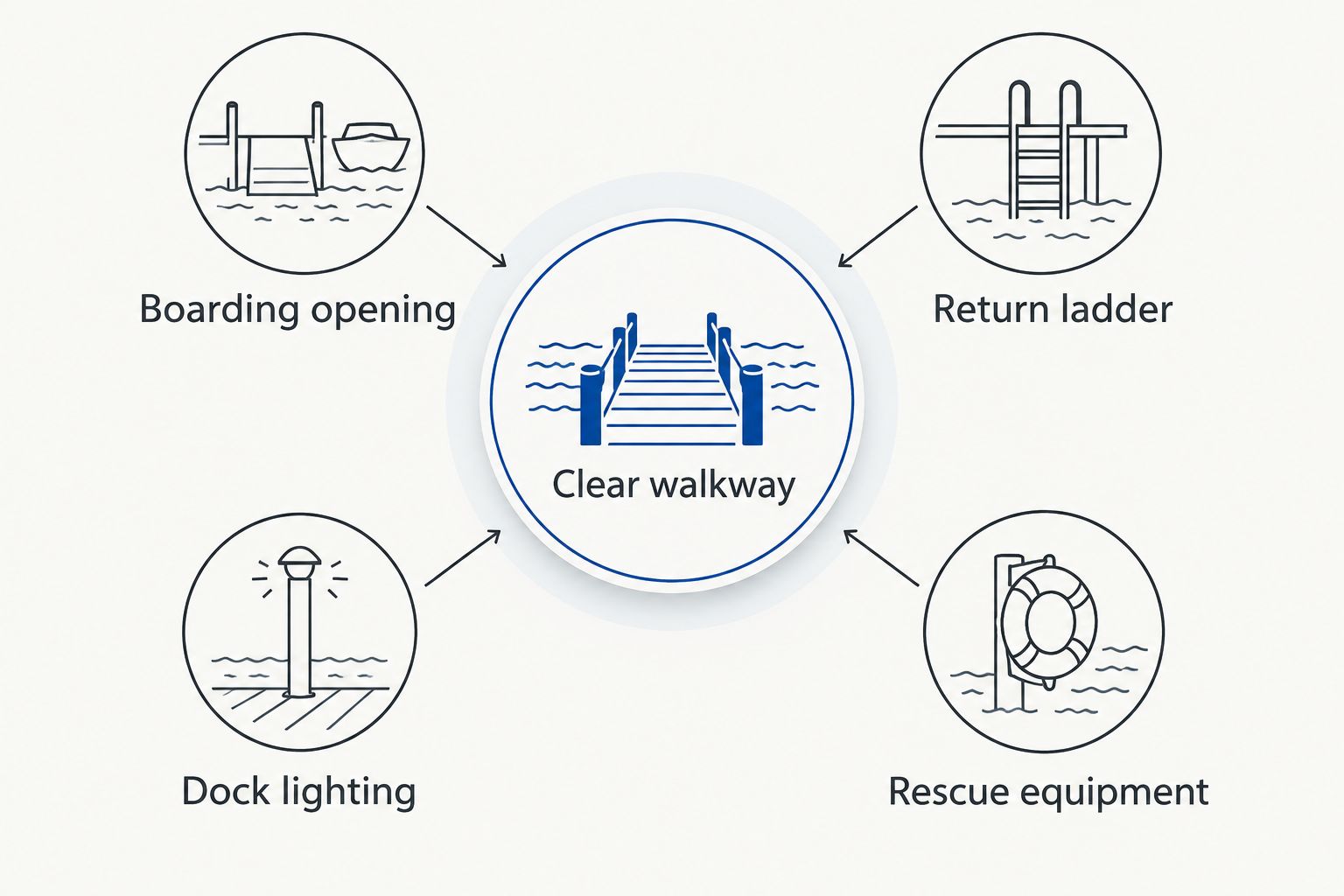
Build the layout around these features:
- Boarding opening: Place access where the boat and dock meet during normal use. Have the contractor resolve required protection at that location.
- Clear walkway: Preserve a practical route between shore, seating, and the boat without crossing stored gear or loose lines.
- Return ladder: Discuss a ladder that a person in the water can reach and use, including how it meets the dock edge.
- Dock lighting: Light walking surfaces, changes in level, and boarding areas without directing glare into approaching boaters’ eyes.
- Rescue equipment: Keep appropriate rescue equipment accessible rather than behind furniture or a locked storage lid.
A gate must work with the intended route, not merely fill a gap between posts. Check its swing, latch access, and relationship to the lift before approving the layout. Discuss applicable electrical requirements with a qualified professional when adding powered equipment or lighting.
Inspect connections, not just visible surfaces
Saltwater maintenance starts with the complete assembly. Cable, aluminum, wood, composite, and glass systems all rely on connections that deserve inspection; a clean top rail does not establish that the posts are sound.
For cable systems, the specification for stainless steel dock railing cable must address end fittings, post connections, and exposure—not just the appearance of the cable. Ask how those parts will be inspected and serviced without unsafe access over the water.
During a dock walkthrough, look for movement at post bases, loose hardware, damaged finishes, wood deterioration, and changes around attachments. Follow the manufacturer’s cleaning instructions; do not assume the same cleaner suits glass, coated metal, cable fittings, and decking.
Keep people away from a loose railing until a qualified contractor assesses it. Tightening an accessible fastener is not a substitute for checking the underlying connection.
What to include in a qualified project quote
For a 2026 quote request, provide 3 measurements where you can obtain them safely: dock width, available boarding-opening width, and the length of each proposed railing run. Label homeowner measurements as preliminary so the contractor can verify them.
Include your boat information, lift arrangement, photos taken from safe positions, preferred railing type, and the access problems you want solved. Tell the contractor whether children, frequent guests, or anyone with mobility limitations regularly uses the dock.
Ask the written scope to identify:
- Railing material, infill, posts, and attachment method.
- Existing framing assessment and any proposed structural work.
- Gate locations and boarding access.
- Responsibility for applicable approvals and inspections.
- Cleaning instructions and access for future maintenance.
Prioritymarine serves waterfront homeowners throughout Pinellas County, including Clearwater Beach. Request a custom dock and boat lift quote with the railing layout included, rather than treating safety features as additions after the dock is designed.
Request a custom dock quote
Discuss your boat, property, railing layout, and boarding access for a Pinellas County waterfront home.
Which dock railing should you choose?
Start with aluminum picket railing unless your priorities point elsewhere. Choose cable for less-obstructed views, composite for a coordinated deck design, wood for continuity with a wood dock, and glass only after resolving safe cleaning access.
For a 2026 dock project, approve the access layout before approving the finish. The right railing supports how you board, walk, entertain, and maintain the property.
FAQ
What’s the best dock railing option for a waterfront home?
Aluminum picket railing is the default choice for homeowners who want a straightforward residential perimeter. The complete assembly still needs suitable framing, connections, and a layout that preserves boarding access.
Is cable railing better than aluminum picket railing?
Cable railing is better for less-obstructed views, while aluminum pickets suit homeowners who prefer a barrier without cable tensioning. Cable fittings and tension require inspection, and the proposed layout must meet applicable requirements.
Does every part of my boat dock need a railing?
Railing requirements depend on the dock design, use, and applicable local rules. Have the contractor identify required protection and resolve boarding openings before approving the layout.
Can I add railing to my existing dock?
You can consider adding railing after a qualified contractor assesses the existing framing and attachment locations. Deck boards alone do not establish that the structure can support new railing posts.
Is stainless steel cable maintenance-free near saltwater?
Stainless steel cable is not maintenance-free near saltwater. Follow the system’s cleaning instructions and inspect cable tension, fittings, and post connections.
What should I send with a dock railing quote request in 2026?
Send boat information, safe site photos, preliminary dock measurements, preferred railing material, and your boarding requirements. Ask the contractor to include the full railing assembly and any supporting structural work in the written scope.
Does Prioritymarine build residential docks outside Clearwater Beach?
Prioritymarine builds and installs custom docks and boat lifts throughout Pinellas County, including Clearwater Beach. Homeowners can request a project quote based on their boat, property, and intended dock use.
One last thing
A railing can make a dock harder to use if its posts occupy the wrong places. Before signing off, trace the route you take while carrying a bag, handling a dock line, and stepping aboard. Then check that route against the proposed posts, gate, and cleats.
Make that walkthrough part of your 2026 design discussion. A finish sample shows what the railing looks like; the layout shows whether it belongs there.
Related guides
- Boat lift types for Pinellas County saltwater docks
- Custom dock features for entertaining waterfront guests
- Dock designs for shallow waterfront lots in Clearwater Beach